


If your permitted stay in Vietnam is ending soon and you want to stay here longer, this article will explain everything you need to know.

Tourists enjoying Vietnam scenery (Source: Bao Dien Tu Chinh Phu)
No. Vietnam tourist visas and e-visas cannot normally be extended. However, eligible foreigners may be considered for a temporary stay extension or a new visa through a qualified sponsor in Vietnam. The available procedure depends on your current immigration status, the reason for staying longer, and whether you meet the relevant legal requirements.
Vietnam's Immigration Department states that e-visa holders already in Vietnam may be considered for a new visa if invited or guaranteed by a qualified authority, organization, or individual under Vietnamese law.
Changing the purpose of a visa is also restricted. Certain eligible circumstances, such as qualifying employment, investment, or family relationships, may permit a new visa to be issued for a different purpose.
You can continue staying in Vietnam through a qualifying in-country immigration procedure or by leaving and re-entering under a new authorization. The most suitable option depends on whether your passport qualifies for Vietnam's visa exemption policy.
|
Your situation |
Possible solution |
|
Eligible for visa-free entry |
Exit and re-enter Vietnam under visa exemption |
|
Not eligible for visa-free entry |
Leave Vietnam and return with a newly approved e-visa |
|
Have a qualified sponsor and supporting documents |
Request an eligible in-country temporary stay extension or new visa |
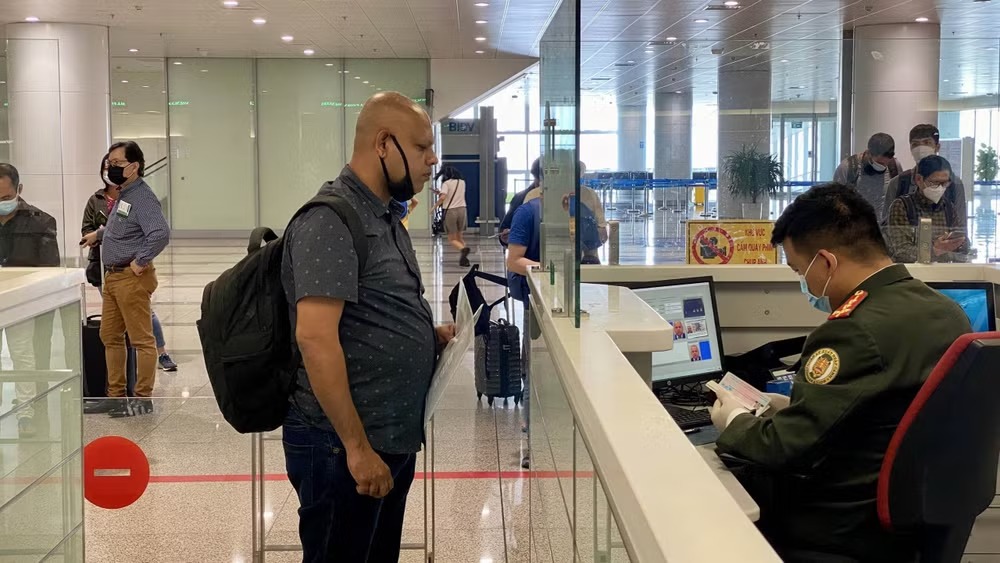
Passport check at Vietnam airport (Source: Vietnam plus)
A visa run is one way to seek another visa-free stay in Vietnam. It involves leaving the country and returning under a fresh entry, provided you continue to meet the applicable Vietnam visa exemption and admission requirements.
How does a Vietnam visa work?
Step 1: Check the visa exemption period applicable to your passport and confirm your current permitted-stay deadline.
Step 2: Choose a nearby country, such as Cambodia, Laos, or China, and check its entry requirements.
Step 3: Leave Vietnam before your authorized stay expires.
Step 4: Return through an eligible border crossing and request entry under Vietnam's visa exemption policy.
A visa run can involve traveling by land or air. Your choice should account for transportation costs, border operating arrangements, and entry requirements for the neighboring country.
Can I do unlimited visa runs in Vietnam?
Vietnam does not provide an unconditional right to repeated visa-free entries. Each new entry is subject to immigration checks. Some nationalities also face cumulative stay limits. For example, Kazakhstani ordinary passport holders can enter Vietnam visa-free for up to 30 days per visit, but their total stay must not exceed 90 days within a 180-day period (Source: Cong Bao Chinh Phu). After using all 90 days, a short trip outside Vietnam does not reset this allowance.
Even where no specific cumulative limit applies, travelers who repeatedly leave and immediately re-enter Vietnam may face additional questions from immigration officers about their actual travel purpose, accommodation, and intended departure date.
If your passport is not eligible for visa-free entry, you need an appropriate visa to return to Vietnam. There are two main options, depending on whether you qualify for an in-country procedure.
Option 1: Apply for an eligible in-country visa or temporary stay extension
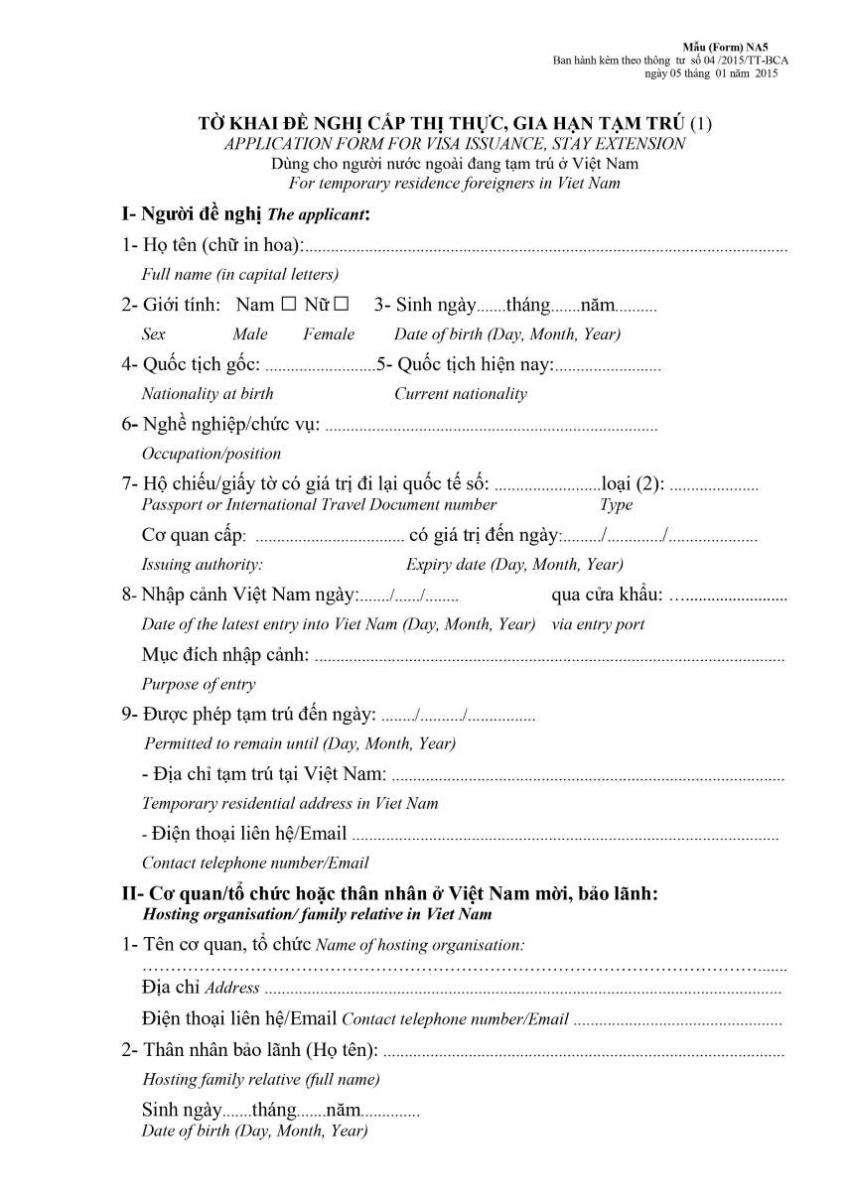
Stay extension NA5 application form (Source: collected)
You may be able to remain in Vietnam without crossing the border if you have a qualifying sponsor and legal grounds for a new visa or temporary stay extension.
Examples of potentially eligible circumstances include:
Importantly, simply finding a company willing to provide a business invitation does not make you eligible to convert a tourist visa into a business or work visa. Actual eligibility and the documents required must be established before applying. Submission does not guarantee approval.
Applying for this new type of visa might be confusing, so you may want to consult a visa service provider for a hassle-free experience. With over 15 years of experience since 2010, UrgentVisaToVietnam has assisted more than 56,000 travelers with Vietnam visa-related applications. Based on our experience, we recommend checking your passport nationality, current permitted-stay deadline, and intended return date before choosing between a visa run and a new e-visa.
For travelers approaching their visa expiry date, our team can help review the available visa options, check application details, and provide urgent e-visa assistance where applicable. Contact us via: +84.904.879.729/+1 (778) 788 2310
Option 2: Leave Vietnam and apply for a new e-visa
For tourists without visa exemption or qualifying sponsorship, leaving Vietnam and obtaining a new e-visa for a subsequent entry is generally the most straightforward alternative. Vietnam issues e-visas with a maximum validity of 90 days, available for single or multiple entries. Unlike an in-country extension, a new e-visa is an authorization for another entry therefore, you cannot apply for an e-visa while you are already in Vietnam.

You may face serious problem if you overstay your visa validity (Source: Bao Lao Dong)
Overstaying your Vietnam tourist visa can result in financial penalties, immigration complications, and possible deportation. The longer you remain beyond your authorized stay, the more serious the consequences can become.
An overstay occurs when you remain in Vietnam after the final day you are legally permitted to stay, without obtaining an authorized extension or other permission. Even if you have already applied for a new visa, your pending application does not always authorize you to remain beyond your current permitted-stay deadline.
Under Article 21 of Decree 282/2025/ND-CP, effective from December 15, 2025, the following administrative fine ranges apply to the specified violations involving expired temporary residence authorization:
|
Overstay duration |
Fine (VND) |
Approx. fine (USD) |
|
Less than 16 days |
500,000-2,000,000 |
20-78 |
|
16 to less than 30 days |
5,000,000-10,000,000 |
195-390 |
|
30 to less than 60 days |
10,000,000-15,000,000 |
390-584 |
|
60 to less than 90 days |
15,000,000-20,000,000 |
584-779 |
|
90 to less than 180 days |
20,000,000-25,000,000 |
779-973 |
|
180 days to less than 1 year |
25,000,000-30,000,000 |
973-1168 |
|
1 year or longer |
30,000,000-40,000,000 |
1168-1557 |
The authorities determine the applicable penalty based on the circumstances of the violation. Other potential consequences include:
If you discover that your permitted stay has expired, address the situation immediately rather than waiting until your flight.
Do not assume you can resolve an overstay simply by paying a fine at the airport. Depending on the circumstances, additional administrative steps may be required. Likewise, leaving Vietnam on a visa run is not a substitute for resolving an existing immigration violation.

Plan your trip carefully (Source: Bao Phu Nu Viet Nam)
The simplest way to avoid an unexpected visa problem is to plan your permitted stay around possible changes to your travel schedule.
Request a suitable e-visa validity period
When applying for a Vietnam e-visa, consider requesting a validity period that accommodates possible itinerary changes, up to the permitted maximum of 90 days. For example, if you expect to stay for 30 days but might remain longer, requesting a longer suitable validity period may give you more flexibility if approved. Leaving Vietnam before your visa expires is permitted. Staying beyond the approved deadline is not.
Check your approved dates, not just your application
The dates entered on your application are not a substitute for the validity dates shown on the issued visa. After approval, verify:
Choose the correct number of entries
A single-entry e-visa becomes invalid once you leave Vietnam, while a multiple-entry e-visa allows repeated entries within its approved validity period of up to 90 days. If you plan to visit Vietnam twice and want to stay for an extended period on each visit, two separate single-entry e-visas may be a better option. Each can provide up to 90 days of validity, potentially allowing two separate stays of up to 90 days each, compared with a multiple-entry e-visa that covers both visits within one 90-day validity period.
Set reminders before your stay expires
Record your permitted-stay deadline and set reminders at least two weeks and several days beforehand. This gives you time to check available options, organize travel, or seek immigration guidance. If an unexpected emergency prevents departure, contact the relevant immigration authority promptly rather than assuming an exception will be granted.
Can I extend my Vietnam tourist visa online?
No. There is no general online self-extension option for ordinary tourist e-visas. Eligible temporary stay extension procedures may support online submissions, but require the applicable documentation and eligibility.
Can I get another 90-day Vietnam e-visa?
Yes. You can apply for another e-visa for a subsequent trip, subject to the official application conditions and approval. A new e-visa may be valid for up to 90 days, but it does not extend your ongoing stay.
Can I leave Vietnam and come back on the same visa?
Yes, if your existing visa is multiple-entry, remains valid, and you satisfy the conditions for re-entry. A single-entry visa cannot be reused after departure.
Can I extend my Vietnam tourist visa without a sponsor?
No. Ordinary tourists generally cannot obtain an in-country extension simply to continue sightseeing. If you have no qualifying sponsor or other eligible grounds, departing and seeking a new entry authorization is usually the practical alternative.
Can I stay in Vietnam while waiting for a new e-visa?
No. A pending e-visa application does not extend your permitted stay. The official individual e-visa application process is for foreigners outside Vietnam, so plan your departure accordingly.
.jpg)
Vietnam visa run vs extension - compare cost, speed and hassle side by side, plus a decision tree based on hours until your flight. Choose the fastest option.
The best option for expats in Da Nang/Hanoi. See the required documents (e-Visa, photos), and costs for a fast and secure land border visa run to Laos.
Renew your Vietnam stay with the fastest land border run. Get the checklist for Moc Bai: e-Visa, photos, stamping fee, and step-by-step for the border crossing.