
A complete Vietnam visa guide is essential for understanding whether you need a visa, which visa type to choose, how much it costs, and how to apply. This Vietnam visa guide 2026 covers visa requirements, types, fees, processing times, and application methods to help you prepare for your trip and avoid common visa mistakes.
Most foreign nationals need a visa or approved e-visa to enter Vietnam, unless their country holds a Vietnam visa-exemption agreement. Otherwise, you generally need an approved visa or visa approval letter before entering Vietnam.
For many travelers, the Vietnam e-visa is now the simplest option because it can be applied for online before departure. The official immigration portal states that e-visas can be issued to eligible foreigners who are outside Vietnam and hold a valid passport.
Some travelers may instead need a visa arranged through a Vietnamese sponsoring organization, depending on their circumstances and visa category, such as Vietnam work or conference visa.
Vietnam grants visa exemptions to citizens of certain countries under unilateral policies or international agreements. Travelers covered by Vietnam's unilateral visa exemption can generally receive a 45-day temporary residence period. The exact eligibility and conditions depend on nationality and the applicable exemption policy.
If you are unsure whether your nationality is exempt, check the current Vietnam visa exemption list before applying for a visa.
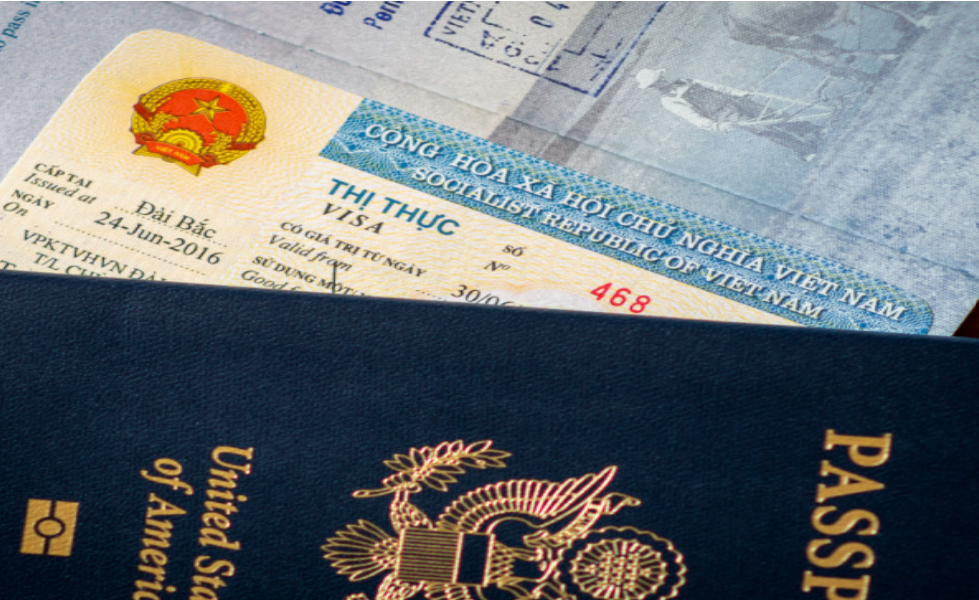
Vietnam traditional embassy visa on passport
Vietnam issues visas by purpose - tourist, business, work, investor and more -and choosing the right code determines your documents and cost.
For most short-term visitors, the tourist e-visa is the most straightforward option. Other categories may require additional documents, sponsorship, or approval from the relevant Vietnamese authorities.
A tourist visa is designed for travelers visiting Vietnam for tourism and leisure.
The e-visa is the most common online option for eligible travelers. It can be issued for single or multiple entry and has a maximum validity of 90 days.
If you are planning a normal holiday, sightseeing trip, or short visit, a tourist e-visa will usually be the first option to consider.
Business and work-related travel require a visa category that matches the purpose of the trip. Depending on the situation, applicants may need documents from a Vietnamese company, employer, or sponsoring organization. The application process can therefore be more involved than a standard tourist e-visa.
Travelers who plan to stay longer or have a specific reason for entering Vietnam may qualify for other visa categories or residence options.
These can include investor, work, family, or other purpose-specific visas. Requirements vary significantly, so applicants should confirm the appropriate category before submitting documents.
Full list of Vietnam visa types
|
Visa Type |
Description |
Validity |
|
LV1-LV2 |
For individuals working with Vietnamese authorities or organizations |
Up to 12 months |
|
NG1-NG2 |
For members of diplomatic representative missions. |
Up to 12 months |
|
LS |
Lawyer visa |
Up to 5 years |
|
DN1 - DN2 |
For individuals entering Vietnam to work with Vietnamese enterprises. |
Up to 12 months |
|
DT1- DT4 |
For foreigners entering Vietnam for investment purposes |
Up to 5 years |
|
LD1- LD2 |
Issued to foreigners entering Vietnam for employment purposes |
Up to 2 years |
|
NN1 |
Members of delegations invited by high-ranking Vietnamese officials, such as the Secretary-General of the Communist Party, President, National Assembly, or Prime Minister |
Up to 12 months |
|
NN2 |
Delegation members invited by senior officials, including Deputy President, Deputy Prime Minister, and various high-ranking positions across the country |
Up to 12 months |
|
NN3 |
Members of diplomatic missions, consular offices, and international organizations affiliated with the UN, along with their families |
Up to 12 months |
|
NN4 |
Individuals coming to work with diplomatic missions or international organizations, along with their spouses, children under 18, and visitors of these members |
Up to 12 months |
|
HN |
For participants attending meetings or conferences in Vietnam |
Up to 12 months |
|
DH |
Student or internship visa |
Up to 12 months |
|
PV1 |
Journalists with permanent residence in Vietnam |
Up to 12 months |
|
PV2 |
Journalists with short-term residence in Vietnam |
Up to 12 months |
|
TT |
For dependents of certain visa holders (e.g., LV1, LV2, DT, DH, and Vietnamese citizens' immediate family members) |
Up to 12 months |
|
VR |
For family visits or other purposes |
Up to 6 months |
|
SQ |
For specific purposes outlined in Vietnam’s immigration law |
Up to 6 months |
|
EV |
Electronic visa (evisa) |
Maximum 90 days |
Compliance with visa regulations is essential. You are not allowed to conduct business or investment activities if you only hold a tourist visa, so make sure to choose the correct visa type before applying.
Every Vietnam visa needs a valid passport, a compliant photo, and category-specific supporting documents.
The exact Vietnam visa requirements depend on the visa type and application method. For an e-visa, the official system requires information from your passport and personal details, as well as a portrait photo and passport information page.
For an e-visa application, prepare:
Your passport should meet the validity requirements before you apply. The official e-visa system specifically requires applicants to hold a valid passport.
Photo and passport files must also meet the technical requirements of the application system. If your application does not meet Vietnam visa photo requirement, you are likely to be rejected and have to submit it again.
Tourist e-visa applications are generally more straightforward because applicants can submit the application online themselves.
Other visa categories may require additional documents, such as:
The documents you need therefore depend on why you are entering Vietnam, not only on your nationality.
Nationality can affect whether you need a visa, whether you qualify for visa exemption, and which visa route is available.
Vietnam's official immigration portal maintains lists of eligible e-visa nationalities and visa-exempt countries. Always check the current rules for your passport before submitting an application.
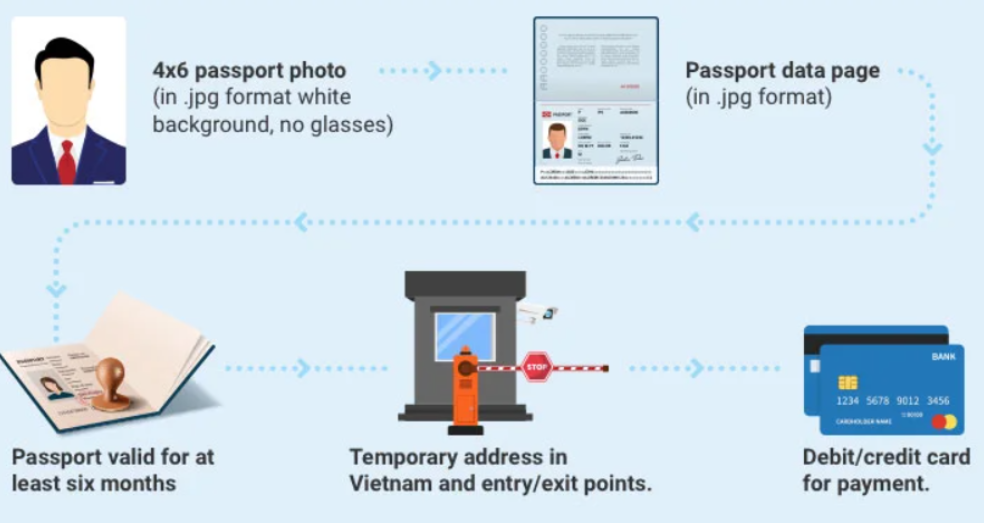
Document required for Vietnam e-visa
Related blog post: 5 Common Vietnam Visa Mistakes Lead to Fines or Entry Ban
Vietnam visa cost combines a government fee and a service fee, with faster processing tiers priced above the standard timeline.
The amount you pay depends on your visa type, entry option, processing method, and whether you use a visa service. The table below is the standard fee for most types of visa, however, you should carefully re-check the fee for the specific type of visa you want to apply for.
|
Stay period and number of entry |
Government fee |
|
Under 90 days single entry |
$25 |
|
Under 90 days multiple entry |
$50 |
|
90 days - 180 days multiple entry |
$95 |
|
180 days - 1 year multiple entry |
$135 |
The e-visa fee is paid through the official electronic payment system and is non-refundable if the application is refused.
Every Vietnam visa application includes standard costs, such as the government visa fee, which depends on your visa type, your stay period and whether you need a single or multiple entry. If you apply through a private visa agency, additional costs may apply for services such as application assistance, faster processing, or handling complex applications.
The minimum standard government processing time for a visa is generally stated as 3-5 working days for an e-visa, although actual processing time can be longer during busy period.
Urgent visa services may offer faster processing for travelers with close departure dates. These services normally charge an additional fee because the application is handled under a faster processing arrangement.
Related blog post: Vietnam Visa Extension and Renewal: Requirements, Process, and Costs
You can obtain a Vietnam visa online through the e-visa system, through an eligible visa-on-arrival arrangement, or through a Vietnamese embassy/consulate depending on your nationality and visa type. For most travelers eligible for an e-visa, applying online is the simplest route.
|
Method |
Best for |
Main advantage |
Main limitation |
|
E-visa |
Most eligible short-term travelers |
Online and convenient |
Requires advance application |
|
Visa on arrival |
Travelers with pre-approval letter |
Useful for urgent cases and certain entry needs |
Requires prior approval and is only issued for entry through airport. |
|
Embassy/ consulate |
Specific visa categories or travelers requiring sponsorship |
Handles cases outside standard e-visa eligibility |
More paperwork and potentially slower |
The Vietnam e-visa is applied for online before travel and can be printed by travelers.
The official system allows eligible foreigners outside Vietnam to submit their application, pay online, and receive the e-visa electronically. You can print the e-visa yourself if needed. E-visas can currently be issued for up to 90 days with single or multiple entry.
This option is generally suitable for tourists who know their travel dates and can apply before departure.
A visa on arrival is issued to travellers with a visa approval letter when they arrive at the airport.
Where an eligible visa-on-arrival arrangement applies, travelers normally obtain the required approval before traveling and complete the visa process at an authorized Vietnamese international airport.
Because entry procedures and eligibility can change, travelers should confirm that the VOA route applies to their nationality and entry port before choosing it. Entry through seaport and land border gate do not allow use of visa on arrival.
Some travelers may need to apply through a Vietnamese embassy or consulate, particularly when their circumstances do not fit the standard e-visa process.
This can apply to certain visa categories, sponsored applications, or travelers who need assistance with a specific visa purpose.
The e-visa suits most travelers who can apply before departure, while an eligible visa-on-arrival route may be useful for certain urgent or specific cases.
|
Factor |
E-visa |
Visa on arrival |
|
Application |
Online before travel |
Approval arranged before arrival |
|
Entry |
Designated international border gates |
Authorized international airports |
|
Validity |
Up to 90 days |
Depends on approved visa |
|
Convenience |
High for most travelers |
Useful in eligible cases |
|
Best for |
Planned trips |
Certain urgent or specific situations |
The official e-visa system currently supports both single and multiple entry for up to 90 days. If you are flying to Vietnam and have enough time to apply, an e-visa is generally the more straightforward choice. With e-visa, you won’t need to queue at the visa on arrival counter when arriving at the airport and can go straight to the immigration counter.
When departure is close, urgent and emergency tiers can compress a multi-day process into hours.
For standard e-visa applications, the official system states a processing time of around three working days.
However, travelers should avoid applying at the last possible moment because errors, corrections, weekends, holidays, or other issues can affect the timeline.
If you need a Vietnam visa shortly before departure, an urgent visa service may be able to help with faster processing.
Depending on the service and application circumstances, processing can be offered in different urgent tiers, including same-day or emergency options.
These services generally cost more than standard processing because they prioritize the application and provide additional assistance.
Related blog post: What to do if I overstay my Vietnam visa? Urgent fix guide
Even a straightforward visa application can be delayed by small errors and may put you in a difficult situation if you do not have enough time to correct them and receive your visa before departure.
Common problems include:
Check every field against your passport before submitting the application.
Do not wait until the day before your flight if you can avoid it.
Standard e-visa processing is generally stated as three working days, but applications can take longer when information needs correction or additional processing is required.
If your departure is approaching quickly, consider an Vietnam emergency visa option rather than relying on standard processing.
Finally, don’t miss our blog! It’s packed with all the tips and insights you need. Whether you're looking for visa tips, or one-of-a-kind experiences, our guide will help you enjoy every moment in Vietnam.
Related blog post: FAQs - UrgentVisaToVietnam.Com
Applying for a visa can be complicated for people who apply for the first time. If you want to avoid all the hassle, contact us via:
Tel: +84.904.879.729
Tel: +1 (778) 788 2310
Email: [email protected]
Address: No10A, Sai Dong, Long Bien, Hanoi
Yes, unless your nationality is exempt or you qualify for another visa-free entry arrangement. Vietnam's official immigration portal provides the current visa-exemption information.
An urgent e-visa service can be the fastest option when you have a tight departure deadline. You can also request a visa approval letter from a private visa agency so you can get your visa on arrival (entry through airport only).
It depends on the visa type and processing method, starting from $25. For an e-visa, the government fee is $25 for single entry or $50 for multiple entry. For other types of visa, you may have to pay for other fees such as document printing, consular legalization,...
For most travelers who can apply in advance, yes. The e-visa is completed online before departure, while visa on arrival requires an eligible approval arrangement before traveling.
It depends on the visa type. Vietnam e-visas can currently be valid for up to 90 days and may allow single or multiple entry.
Yes, you can get a Vietnam visa on the same day through the service of a private visa agency. Standard processing takes 3-5 days.
Usually, you need a valid passport, a compliant portrait photo, and application information. Additional documents such as work permit, invitation letter may be required for business, work, investor, or other visa categories.